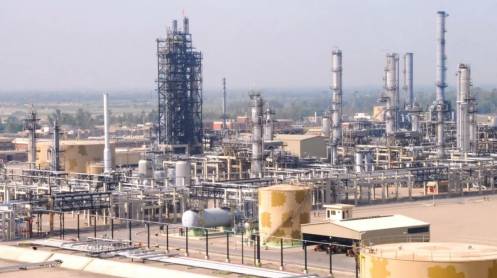
ISLAMABAD: Pakistan is set to sign long-delayed agreements with five major oil refineries on Thursday, paving the way for more than $6 billion in planned investment to modernise ageing plants, boost domestic production of petrol and diesel, and reduce the country’s dependence on refined fuel imports.
The agreements with Pak-Arab Refinery Ltd. (PARCO), Pakistan Refinery Ltd. (PRL), National Refinery Ltd. (NRL), Cnergyico and Attock Refinery Ltd. (ARL) are being finalised through a series of meetings between the Petroleum Division and Inter-State Gas Systems (ISGS), a senior Petroleum Division official told The News.
“The signing parties are ready, and most probably these will be inked on Thursday,” the official said.
The government has authorised ISGS to execute the agreements and oversee their implementation, replacing an earlier arrangement under which the Oil and Gas Regulatory Authority (Ogra) was expected to manage the process.
The proposed upgrades are expected to significantly enhance the refineries’ processing capabilities, including their ability to handle a wider variety of crude oil. According to an ISGS official, upgraded facilities could process crude from sources such as Iran and Russia, subject to applicable Pakistani laws and international sanctions.
However, industry stakeholders have cautioned that signing the agreements alone will not guarantee that the multibillion-dollar investments materialise.
The refinery upgrade programme could remain stuck at the stage of “paper agreements” if changes to the incentive and financing mechanism make the projects difficult for lenders to support. Industry circles have raised particular concerns over a reported proposal to replace jointly controlled escrow accounts with government-controlled accounts.
“Signing an agreement is only the first step. Agreements and MoUs do not bring investment — bankable projects do,” a senior industry source said. “The real achievement will be when lenders accept the structure, financial close is achieved and investment actually starts flowing into refinery upgrades.”
Industry officials argue that the proposed change to the escrow mechanism is more than an administrative adjustment, as it could affect the control, security, ring-fencing and accessibility of funds forming part of the financial framework under the Brownfield Refinery Policy.
The issue is considered critical because refinery modernisation requires substantial capital expenditure and is expected to depend heavily on financing from both domestic and international lenders. Any uncertainty over the security or availability of incentive funds could therefore complicate efforts to achieve financial close.
The Petroleum Division spokesperson did not respond to repeated calls or a detailed query seeking clarification on the reported change in the escrow mechanism for refinery incentives.
The successful implementation of the upgrade programme would represent a major step towards strengthening Pakistan’s refining capacity, increasing domestic fuel production and reducing pressure on foreign exchange reserves caused by refined petroleum imports. However, industry stakeholders maintain that financial closure and actual investment—not merely the signing of agreements—will ultimately determine the success of the programme.
Story by Khalid Mustafa & Israr Khan